
TLDR: Telecom carriers and OEMs face increasing pressure to deploy on-device call screening and spam filtering comparable to Google Pixel's implementation, as AI-powered robocalls, spam, and scams grow in number and sophistication. This guide evaluates platform-dependent solutions, carrier network filtering, and fully customizable on-device AI architectures that preserve privacy, enable differentiation, and reduce reliance on ecosystem gatekeepers.
Why On-device Call Screening and Spam Filtering Are Becoming Table Stakes for OEMs and Telcos
On-device call screening and spam filtering are quickly becoming important features for OEMs and telecom operators. As robocalls, spoofing, and voice fraud continue to rise globally, users now expect their devices and networks to intelligently screen, answer, and route calls — not just block known spam numbers.
Google Pixel's Call Assist has set the benchmark by using on-device AI to answer unknown calls, transcribe conversations in real time, and let users decide whether to engage. However, this capability is tightly controlled by a platform owner and available in limited markets.
For device manufacturers and telcos, the strategic question is clear: build, buy, or wait. This guide examines the technical and business tradeoffs of each approach — and why on-device AI offers a path to privacy, control, and differentiation.
What is the Ideal Call Screening and Spam Filtering Pipeline
A production-grade on-device call screening and spam filtering pipeline consists of five sequential stages:
Call classification: The pipeline first determines whether an incoming call originates from a known contact, an unknown number, or a flagged source. Classification uses a combination of on-device heuristics, local spam databases if available, and probabilistic confidence scoring to assign a risk level before the call is answered.
Automated call answering: If the call is unknown or flagged, the system answers automatically without requiring user interaction. The call state is managed entirely on-device, including timing, silence detection, and handling of both human callers and automated dialing systems.
Conversational interaction: The system engages the caller with open-ended questions such as "Who's calling?" or "What is this about?" and processes free-form speech responses using on-device natural language understanding. Replies are generated and spoken aloud in real time, allowing the interaction to proceed naturally without the user's involvement.
Real-time transcription & summarization: Caller speech is transcribed continuously using a streaming speech-to-text engine, allowing users to see it in real time. The transcript is analyzed to surface intent, urgency, and key entities, producing an actionable summary that the user can read at a glance before deciding how to respond.
User or system-driven routing: Based on the transcript and intent analysis, the call is routed automatically or presented to the user for a decision: escalate to the user, send to voicemail, terminate the call, or trigger a downstream workflow such as a callback request or CRM entry.
Platform-Owned Call Screening Solutions (Google Pixel, Apple, Samsung)
1. Call Assist by Google (Pixel Call Screening)
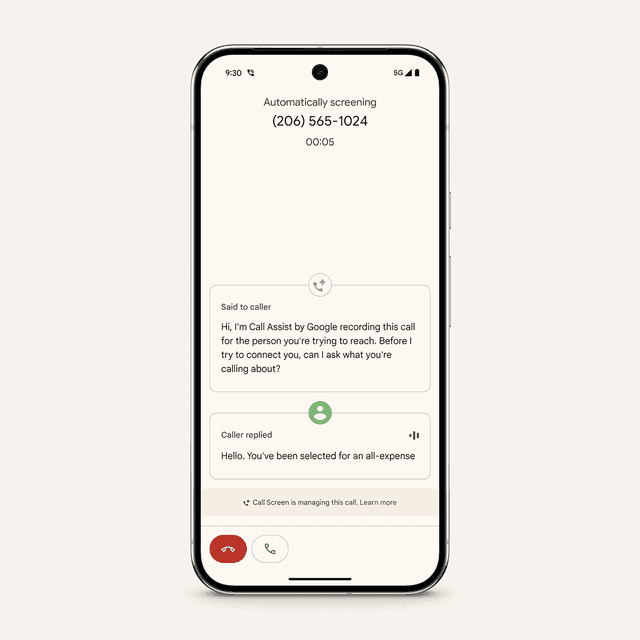
Google Pixel phones offer the most advanced consumer call screening implementation through the Phone app. The system uses on-device AI technology to automatically answer unknown calls, conduct conversational interactions, provide real-time transcription, and let users decide whether to accept or reject calls. Key features of Pixel Call Screening include:
- Automated call answering without user involvement
- Natural language conversation with callers
- Live call transcription and summarization
- On-device processing for privacy protection
2. Call Screening and Spam Filtering on Apple iPhone
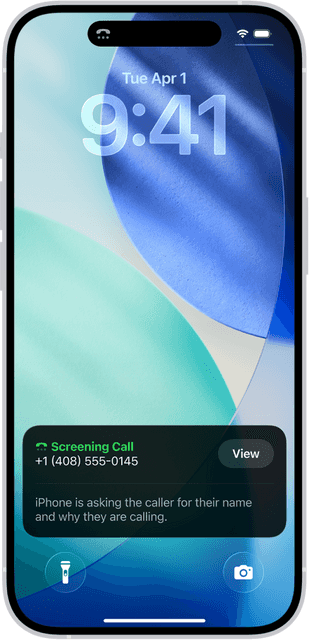
iOS provides built-in call screening that silences unknown callers and prompts them to state their reason for calling before the user is notified. Unlike Google’s AI-powered conversational screening, which uses complex on-device natural language understanding and text-to-speech to autonomously answer and converse with callers, Apple's approach silences unknown calls and prompts callers to state their name and reason for calling before the iPhone rings. The user then decides whether to answer based on that information.
Ask Reason for Calling: Calls from unknown numbers will be asked for more information before the iPhone rings.
Silence: Calls from unsaved numbers will be silenced, sent to voicemail, and appear in the Recents list.
This is essentially Apple's version of Google Pixel's call screening, not AI answering through Text-to-Speech like Google's, but asking for a reason and filtering spam effectively.
3. Samsung Smart Call
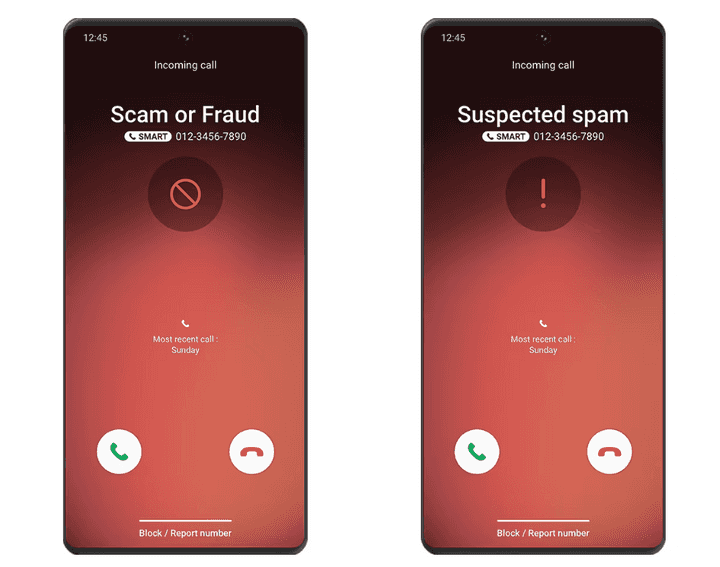
Similar to iPhone Call Screening, the Smart Call feature on newer Galaxy phones grants users access to basic spam blocking, letting users know who's calling and whether it could be spam or a scam.
Carrier Network-Level Call Screening and Spam Filtering
Major carriers worldwide implement network-level call screening before calls reach devices:
- Verizon Call Filter and AT&T Call Protect (United States)
- T-Mobile Scam Shield (United States)
- Rogers, Bell, and Telus Spam Filtering (Canada)
- Vodafone, O2, and other international carriers
Carrier solutions flag or block suspected spam at the network layer, often using authentication protocols. While effective for known spam patterns, network filtering cannot provide the conversational interaction, real-time transcription, or personalized screening that on-device AI enables.
The Gap: No Portable, On-Device Call Screening Alternative to Google Pixel
Across the ecosystem, a clear gap remains: there is currently no commercially available, cross-platform, white-label on-device call screening stack that replicates Pixel-class conversational screening while remaining portable across Android forks, embedded Linux, RTOS, and automotive systems.
This gap affects:
- Smartphone manufacturers competing with Pixel
- Feature phone builders
- Automotive infotainment systems
- Enterprise and ruggedized device OEMs
- IoT devices with call handling capabilities
These enterprises need call screening solutions that are platform-agnostic, privacy-preserving, customizable, and embeddable across device types and operating systems.
Why OEMs Can't Rely on Google Pixel Call Screening
Google Pixel call screening availability is limited to 10 countries with new Pixel devices as of today. Google itself doesn’t offer it across all Pixel devices and globally, using it to differentiate its latest models. Yet, OEMs and telcos need call screening and spam filtering solutions that are platform-agnostic, privacy-preserving, customizable, and embeddable across device types and operating systems for a unified user experience. Google’s platform ownership and control create a critical challenge for other enterprises. The most sophisticated call screening technology is not available to use, let alone offering customization, branding, and differentiation opportunities.
OEMs need call screening and spam filtering solutions that are platform-agnostic, privacy-preserving, customizable, and embeddable across device types and operating systems.
Strategic Implications of Call Screening for OEMs and Telcos
1. Product Differentiation
- Integrating on‑device spam filtering with local AI models can differentiate devices in markets plagued by robocalls.
- OEMs can offer tiered experiences: basic on‑device filtering, advanced AI screening, and contextual insights (e.g., likelihood of scam) as premium features.
2. Revenue and Engagement Models
- Embedding spam protection into platform services creates opportunities for subscription or carrier‑bundled revenue.
- OEMs could expose APIs to third parties (e.g., analytics/reporting partners) for ecosystem innovation.
3. Regulatory and Compliance Advantage
- Network‑verified identity services like CNAP (Calling Name Presentation) are becoming compliance requirements in certain markets; early support can position partners for regulatory leadership.
- Operators aligning with standards such as STIR/SHAKEN, which require voice service providers to authenticate and verify caller ID information for IP-based calls to combat spoofing and illegal robocalls, can reduce liability and fraud risk, promoting trust among enterprise customers.
Call Screening Implementation Options for OEMs and Telcos: Build, Buy, or Wait
Buy, build vs. open source is one of the fundamental decisions enterprises make before starting software development. In this case, there is no ready-to-use solution to purchase or open-source.
Attempting to build the full stack from scratch, even with open-source components, often takes multiple years. On-device AI introduces strict constraints on memory footprint, model size (sub-100 MB, ideally sub-50 MB), inference latency (sub-300 ms human turn-taking), battery consumption, and thermal throttling behavior. Architectural choices directly impact real-time conversational quality, UX, and device health.
Build by Using Open-Source Components
To minimize power draw and latency, the on-device call screening stack must include optimized components, such as real-time transcription, intent extraction, summarization, and text-to-speech, engineered to operate within strict memory and CPU constraints.
Open-source models built for research or adapted from server-scale architectures often introduce excessive inference latency, increased battery drain, and thermal instability, degrading real-time call experiences.
Enterprises should evaluate the total cost of ownership, including optimization effort, model compression, hardware tuning, and long-term maintenance of inefficient architectures.
Build by Buying Commercial On-Device AI Components
Buying proven on-device voice AI technology to build a custom call screening and spam filtering solution offers the fastest path to market while preserving maximum control, privacy, and differentiation.
OEMs and telcos retain full ownership of the end-to-end experience: conversational flows can be customized, assistant behavior branded, and the solution deployed consistently across devices, operating systems, and regions. Because audio is processed entirely on-device, call data never leaves the hardware, simplifying regulatory compliance and strengthening user trust.
With specialized embedded voice AI platforms providing on-device speech recognition, natural language understanding, and text-to-speech, production deployments are typically achievable within 3–6 months.
Wait: Rely on Network Filtering or Platform Owners
Network-level spam filtering remains effective at blocking known robocall patterns before calls reach devices. However, it cannot deliver the conversational call screening, real-time transcription, or personalized decisioning that users increasingly expect.
Routing call data through carrier infrastructure also raises privacy considerations, particularly in markets with strict data residency or consent requirements.
Waiting for platform owners to expose Pixel-class call screening capabilities is a high-risk strategy. Even Google’s own implementation remains limited to Pixel devices and a small number of countries. Platform-controlled features offer little customization, no branding, and no meaningful differentiation.
Delaying adoption carries tangible business costs: lost competitive advantage, missed revenue opportunities from premium AI services, and higher churn driven by poor call experiences. Reducing unwanted calls directly improves customer satisfaction and retention, which are the metrics that materially impact carrier economics.
Why Picovoice for On-Device Call Screening and Spam Filtering
Flexibility for differentiation: Picovoice gives OEMs full control over conversational flows, assistant behavior, and the feature roadmap — enabling branded, differentiated call experiences that platform-owned solutions cannot offer.
Cross-device portability: The platform runs across smartphones, automotive infotainment systems, smart terminals, and embedded Linux and RTOS devices, making it deployable across an OEM's entire product line from a single integration.
Privacy by design: Audio is processed entirely on-device and never transmitted to external servers or third-party cloud infrastructure. This eliminates a significant class of data residency obligations and simplifies compliance with regional privacy regulations.
All-in-one platform to build call screening: Picovoice provides every component required to build a production-grade call screening stack: small language models for call classification, a streaming STT to transcribe caller speech, on-device language models to extract intent and generate follow-up questions, a streaming TTS engine to speak those questions aloud, and summarization models to produce a routing decision for the user or downstream system — all running locally on the device.
Next Steps: Build On-Device Call Screening Across Devices
Call screening is no longer a "nice to have." It is becoming:
- A competitive differentiator
- A trust and privacy signal
- A measurable driver of customer retention
Manufacturers and telcos that rely solely on ecosystem partners risk falling behind as users increasingly expect intelligent call handling. The technology to close this gap exists today. Partnering with an embedded voice AI provider like Picovoice enables full ownership of the call experience without sacrificing performance, privacy, or flexibility.
OEMs and telcos exploring call screening, automated call answering, or conversational telephony features can contact Picovoice to get help with a custom solution addressing all end-user concerns.
Consult Sales


